


A lot of interview scheduling software in the enterprise tier comes with a real commitment attached: annual contracts, implementation timelines measured in weeks, and a sales process before you even get to try the product. That's a reasonable tradeoff if you know exactly what you need and you're confident it'll work for your team. It's a much bigger risk if you're still figuring out whether the tool fits.
Why long-term contracts are the default in this category
Enterprise scheduling platforms like GoodTime, ModernLoop, and Paradox are built and priced for large organizations with predictable, high-volume hiring. Their sales and pricing models reflect that: custom quotes, annual commitments, and onboarding processes designed around a big, planned rollout rather than a quick trial. For a company that's certain about its needs and has the internal resources to manage an implementation, that model works fine.
The problem shows up for teams that don't fit that mold, smaller agencies, teams evaluating multiple tools, or anyone who wants to actually use a product for a few weeks before deciding. An annual contract signed before you've tested the tool against your real workflow is a real risk, not a formality.
What to ask before signing anything
Is there a real trial, or just a demo? A live product demo shows you what a tool can do in theory. It doesn't tell you whether it'll actually work with your specific candidates, clients, and edge cases. A genuine trial period, where you can run real interviews through the tool, tells you far more than any sales call.
What's the actual minimum commitment? Some vendors will quote month-to-month pricing if you ask directly, even when their public pricing implies an annual-only structure. It's worth asking explicitly rather than assuming the listed terms are the only option.
What happens if it doesn't work out? Ask directly about cancellation terms, data export, and whether you're locked in if the tool turns out to be a poor fit after a few months of real use. A vendor confident in their product shouldn't hesitate to answer this clearly.
How long does implementation actually take? An eight-to-twelve-week implementation timeline is a meaningful commitment on its own, independent of the contract length. If you're evaluating multiple tools, the one you can actually be running in a day is a very different proposition than one that requires a quarter of setup before you see results.
Where this matters most
The risk of long-term lock-in is highest when you're not yet certain the tool solves your actual problem. That's especially true for external recruiting agencies evaluating scheduling software built for a different workflow than theirs. Most enterprise scheduling platforms assume internal interviewers on a shared calendar system. If you're an agency coordinating between candidates and clients who don't share a system, a tool that wasn't built for that structure won't start working better just because you signed a longer contract for it.
Where Arrange fits
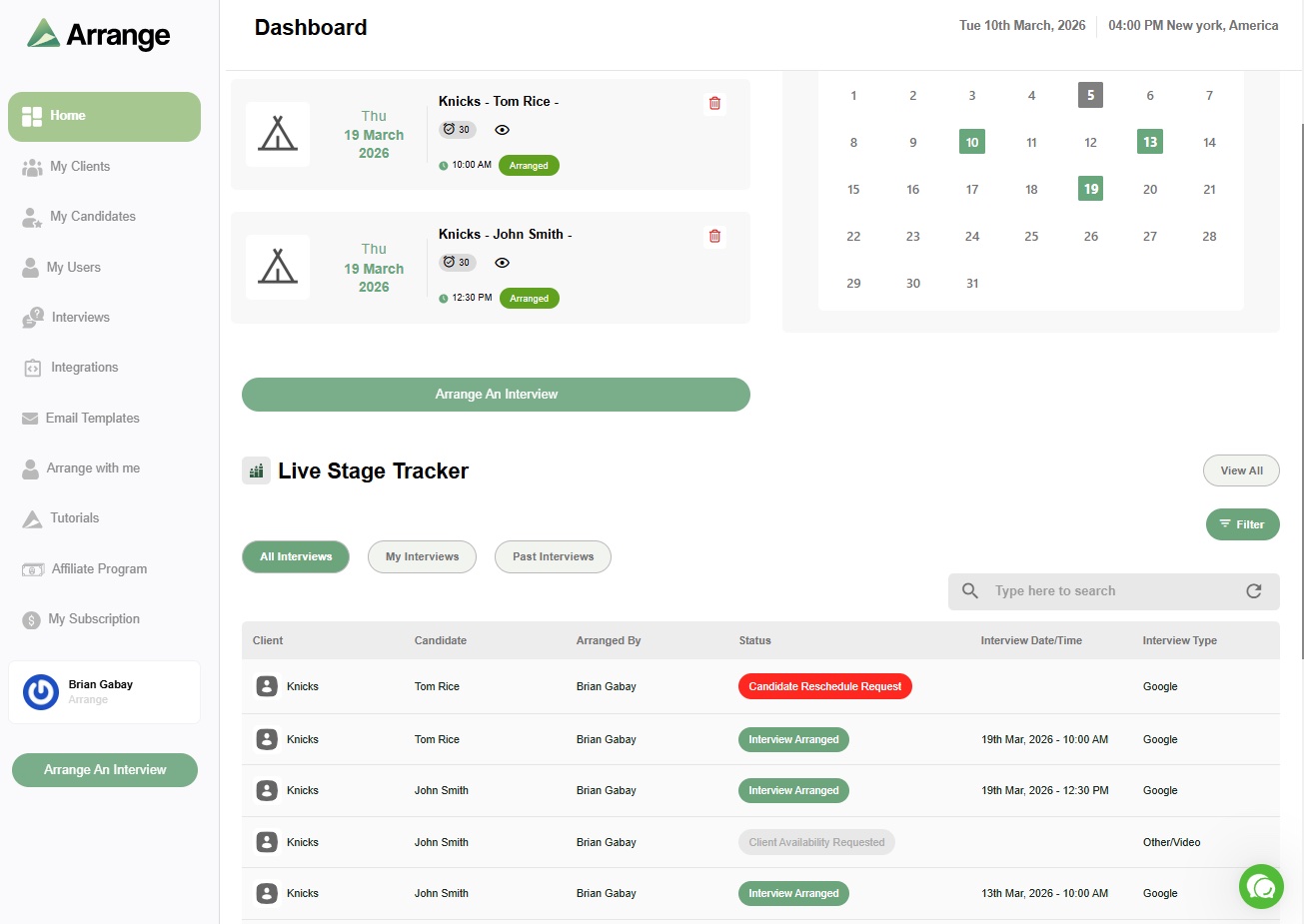
Arrange runs on a 14-day free trial with no credit card required to start, and pricing is month-to-month at around $35 per user, not an annual contract negotiated through a sales process. You can be scheduling real interviews the same day you sign up, not weeks into an implementation. That matters most when you're not yet certain a tool is the right fit, since the cost of finding out is a couple of weeks, not a signed annual agreement.
FAQ
Do all interview scheduling platforms require annual contracts?
No, but most enterprise-tier tools default to them. It's worth asking directly whether month-to-month pricing is available even if it's not listed publicly, and prioritizing tools with a genuine trial period if you're not yet certain about fit.
What's the risk of signing a long-term contract before trying a tool?
If the tool doesn't fit your actual workflow, an annual commitment means you're stuck paying for something you're not using, or negotiating an early exit. A real trial period, where you run actual interviews through the tool, is a much lower-risk way to evaluate fit before committing.
How long does implementation typically take for enterprise scheduling software?
Enterprise platforms often quote eight to twelve weeks for full implementation. Tools built for a lighter, self-serve setup, like agency-focused scheduling software, can typically be running within a day, which is worth weighing separately from the contract length itself.


.jpg)

.jpg)
.jpg)