


.jpeg)
Paradox has carved out a clear position in the recruiting market: high-volume, frontline hiring in retail, healthcare, and hospitality. Its AI assistant Olivia handles candidate screening and scheduling via SMS and chat, engaging applicants immediately after they apply and automating the coordination process from there. For employers hiring hundreds of similar roles every month, that's a compelling value proposition.
There's also a significant development worth knowing if you're evaluating Paradox now: the company was acquired by Workday in October 2025. It remains available as a standalone product, but buyers should confirm the long-term support roadmap during the sales process, as the integration strategy with Workday's broader suite may evolve.
If Paradox doesn't fit your situation - because of the cost, the workflow, the Workday acquisition, or simply because your hiring looks nothing like high-volume frontline recruitment - here are the alternatives worth considering.
Why recruiters look for Paradox alternatives
Paradox is priced for enterprise employers. Estimates put annual costs between $30,000 and $100,000 or more depending on volume, making it difficult to justify for organizations hiring fewer than a few hundred people per year. Implementation timelines can run eight to twelve weeks, which is a significant commitment before you see results.
The other common issue is fit. Paradox's chat-first workflow - candidates interacting with Olivia via text rather than through a traditional scheduling interface - works well for frontline hiring where speed and simplicity matter. For professional-level searches, relationship-driven agency recruitment, or structured interview processes that require human involvement at each step, the fully automated conversational approach can feel like the wrong tool.
The best Paradox alternatives for recruiters
Arrange

Arrange is built for a fundamentally different recruiting context than Paradox - external recruiting agencies coordinating professional-level searches between candidates and clients who aren't inside the same system.
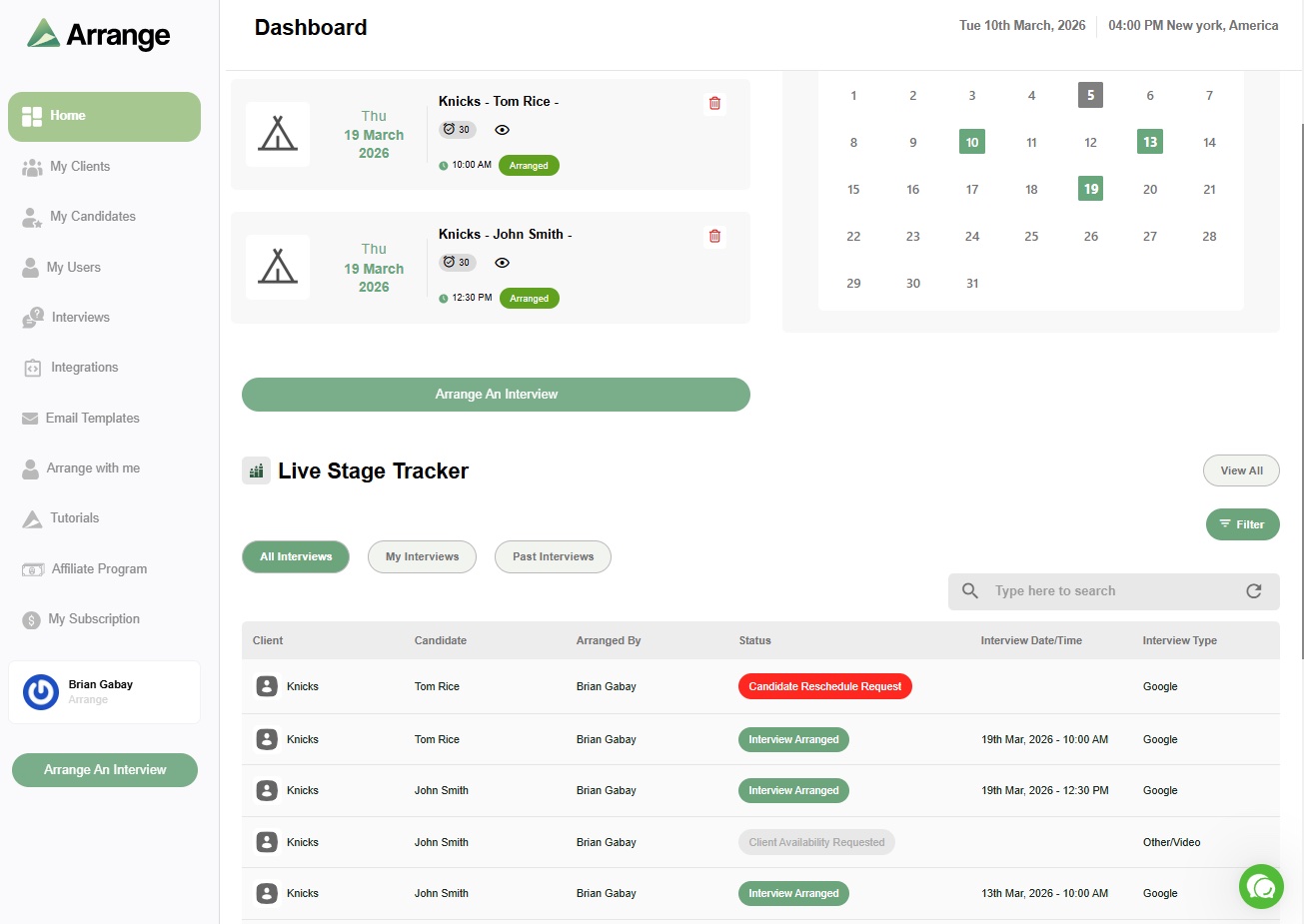
Where Paradox automates candidate engagement via conversational AI, Arrange gives recruiters control over the coordination process while removing the manual back-and-forth. You can collect availability from a candidate, present it to a hiring manager at a client company, and confirm the interview - without requiring anyone to log in or create an account. The process stays in your hands rather than being delegated to an AI assistant.
Scheduling modes include candidate-first, client-first, and Matchmaker (which collects availability from both sides simultaneously and auto-confirms the first match). Arrange Connect lets hiring managers link their calendar directly so candidates book against live availability.
ATS integrations include Loxo, Crelate, Recruiterflow, and RecruitCRM. Pricing starts at around $35 per user per month with a 14-day free trial - no implementation timeline required to get started.
Best for: external recruiting agencies managing professional-level searches who need coordination between candidates and clients without requiring either party to log in.
GoodTime

GoodTime is an enterprise scheduling platform for in-house talent acquisition teams running structured, high-volume hiring. Unlike Paradox, which focuses on conversational AI and frontline hiring, GoodTime focuses on interview orchestration - panel coordination, interviewer load balancing, ATS-triggered automation, and deep integrations with Greenhouse, Lever, and Workday.
If you were evaluating Paradox for an in-house team and found the conversational AI approach wasn't the right fit, GoodTime is worth comparing. It's similarly priced at the enterprise tier (typically starting around $25,000 per year) but takes a more traditional scheduling interface approach rather than a chatbot-driven one.
Best for: enterprise in-house talent acquisition teams with high interview volume who want structured scheduling automation without the conversational AI layer.
ModernLoop
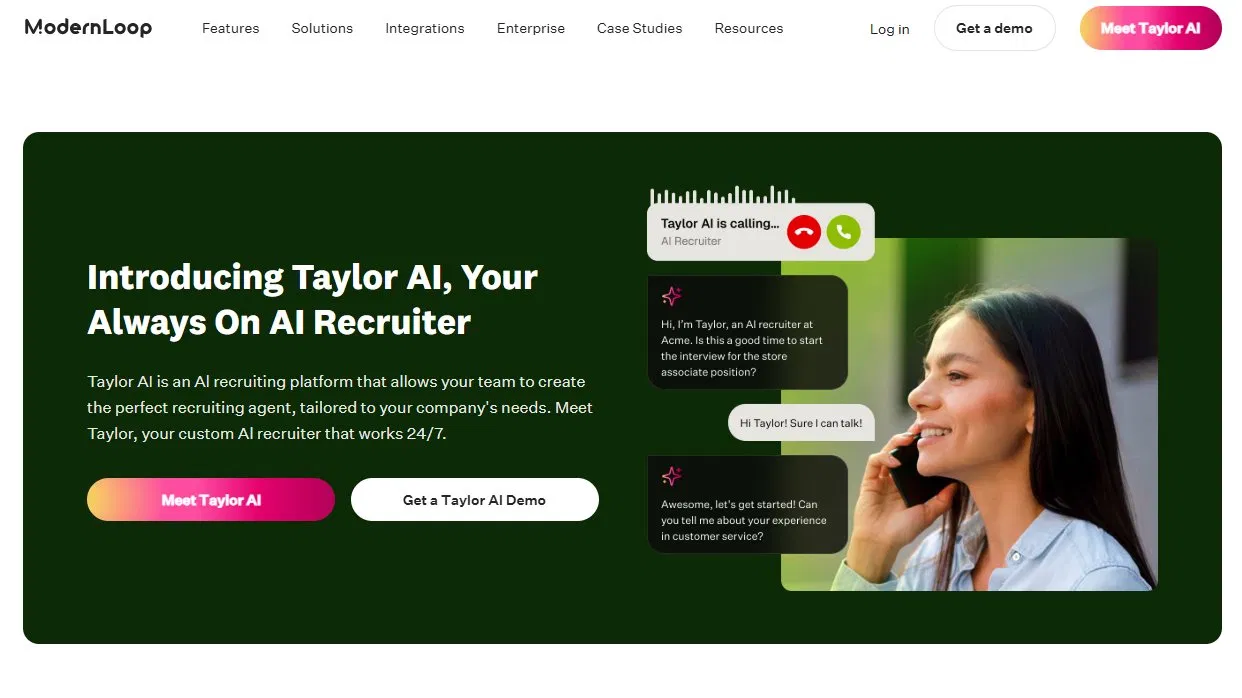
ModernLoop is another strong in-house scheduling platform, comparable to GoodTime in positioning. Its Zero Click Scheduling feature automatically triggers scheduling actions as candidates move through ATS stages, which achieves some of the same automation goals as Paradox's approach - just through a different mechanism.
It integrates with Greenhouse, Lever, Workday, Ashby, and SmartRecruiters. Pricing is not publicly listed but is generally in the same enterprise range as GoodTime. Worth including in any in-house scheduling evaluation alongside GoodTime to compare pricing and feature fit.
Humanly
Humanly is the closest thing to a direct competitor Paradox has for high-volume, hourly hiring. Where Paradox's Olivia handles candidate engagement and scheduling through conversational chat, Humanly goes a step further, combining an AI Recruiter with a full AI Interviewer that conducts structured chat, voice, or video interviews and automatically schedules the next step. It positions itself explicitly against Paradox: automating the full engagement-to-interview pipeline rather than just the scheduling conversation.
For teams already comparing Paradox to alternatives specifically for frontline or hourly hiring, Humanly is worth evaluating alongside it, both aim at the same high-volume use case, just with a different split of what's automated.
Best for: high-volume hourly or frontline employers who want AI-driven screening and interviewing bundled with scheduling, not just the scheduling conversation alone.
HigherMe
HigherMe is purpose-built for hourly hiring in franchises, QSR, hospitality, and retail specifically, a narrower vertical than Paradox's broader high-volume frontline positioning. Its Auto Scheduling feature lets qualified candidates self-book and reschedule interviews based on the hiring manager's real availability, with reported reductions in no-show rates. It's bundled with the rest of the hiring workflow, sourcing, screening, onboarding, and payroll integrations, rather than sold as a standalone scheduling layer.
Compared to Paradox, HigherMe trades broader applicability for deeper focus on one segment: multi-location, hourly, mobile-first hiring, brands like Dunkin' and Tim Hortons use it at scale.
Best for: franchise and multi-location hourly employers, particularly in QSR, retail, and hospitality, who want scheduling built into a full hiring and onboarding workflow for one specific vertical.
Rooster
Rooster is a Workday-native interview scheduling tool built specifically for teams already running Workday Recruiting, with deep bi-directional integration into that system. It automates individual and panel interview scheduling, offers candidate self-scheduling, and includes time zone intelligence for global teams. If you're comparing Rooster to Paradox, the key difference is scope: Rooster is a scheduling layer purpose-built for Workday shops, while Paradox is a broader conversational AI platform for candidate engagement and screening, not just scheduling.
Best for: in-house teams already on Workday Recruiting who want scheduling automation without adopting a full conversational AI layer.
Guide
Guide is an AI-powered interview scheduling platform built for enterprise teams with complex, high-volume interview processes. Its AI communicates directly with interviewers to keep availability, time zones, and load preferences current, which cuts down on reschedules. It's a strong fit for large in-house teams managing structured, multi-stage interview loops. Like Rooster and ModernLoop, it assumes interviewers are internal employees on a shared calendar system.
Best for: large in-house recruiting teams running complex, multi-interviewer processes at enterprise scale.
candidate.fyi
candidate.fyi takes a candidate-experience-first approach, giving candidates a personalized hub for interview prep, scheduling, and company information. It's worth comparing to Paradox if your priority is candidate experience over high-volume automation. It doesn't solve the frontline, high-volume hiring problem Paradox is built for.
Best for: employer brand-conscious in-house teams who want a polished candidate portal, not high-volume conversational automation.
Calendly
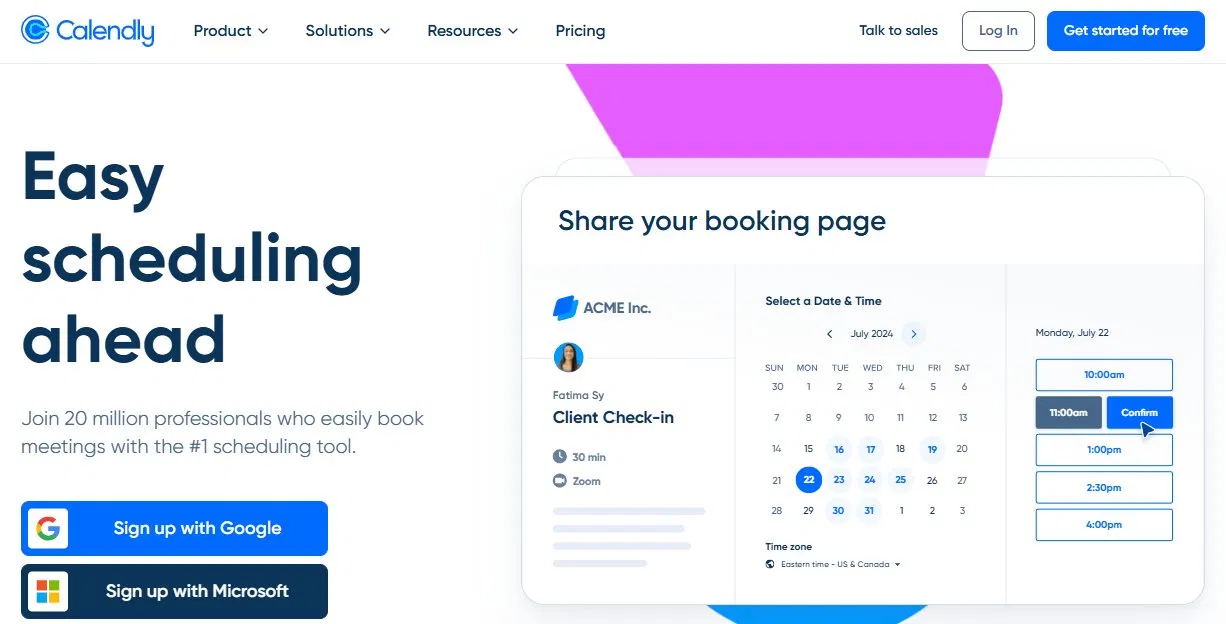
Calendly sits at the opposite end of the complexity spectrum. It's simple, inexpensive, and widely recognized - recruiters use it primarily for booking initial screens and phone calls where they're one of the participants.
It doesn't automate candidate engagement the way Paradox does, and it doesn't coordinate between multiple external parties. But if your situation is straightforward - you need a clean booking link and the rest of your scheduling is handled manually - Calendly does that well at a fraction of the cost.
Free plan available. Paid plans run from $12 to $20 per seat per month, with enterprise options starting around $15,000 per year.
Best for: recruiters who need a simple, low-cost booking link for phone screens and introductory calls.
VidCruiter
VidCruiter combines video interviewing with scheduling in one platform, with strong compliance and audit trail features. It's a common choice for government, regulated industries, and organizations that need standardized interview formats with documented scoring.
Where Paradox focuses on frontline volume and speed, VidCruiter focuses on structured, defensible hiring processes. If your evaluation of Paradox was driven by a need to automate the video interview step alongside scheduling, VidCruiter offers both in one platform. Pricing is not publicly listed.
Best for: organizations running structured, compliance-driven hiring that need video interviewing and scheduling together.
Metaview
Metaview is the Agentic Recruiting Platform. It doesn't schedule interviews, so it's a different kind of alternative: if screening inbound applicants was part of why you looked at Paradox, Metaview covers that step and the interviews that follow, alongside whichever scheduler you choose.
Application Review reads every inbound application against the role's Ideal Candidate Profile, sorts candidates into fit buckets, and shows the reasoning behind each one. Recruiters make every accept and reject call, and Metaview never auto-rejects. Once an interview is booked, the Notetaker joins the call as a visible participant, records and transcribes it, and turns it into structured notes and a draft scorecard for the interviewer to review.
Application Review syncs candidates in from ATSs including Ashby, Greenhouse, Lever, and Workable. Metaview also connects to calendar and scheduling tools such as Google Calendar, Microsoft Outlook, and Calendly.
Metaview has a free plan; paid plans are priced per agent.
Best for: recruiting teams that want AI help reviewing inbound applications and capturing interviews, and already have a scheduling tool they're happy with.
Koalendar
Koalendar is a lightweight scheduling tool that competes at the free and low-cost end of the market - a step up from Calendly's free tier with unlimited bookings, multiple calendar connections, time zone handling, and round-robin support built in.
Like Calendly, it's not designed for the kind of automated, high-volume candidate engagement Paradox handles. But for teams that just need a functional scheduling link without enterprise pricing, it's worth knowing about.
Best for: small teams or solo recruiters who need a basic scheduling link at low or no cost.
Which alternative fits your situation
The answer depends heavily on why Paradox isn't the right fit.
If the issue is cost - Paradox's enterprise pricing is hard to justify without high volume. GoodTime and ModernLoop are similarly priced but serve a different workflow. Calendly and Koalendar are inexpensive but solve a much simpler problem.
If the issue is workflow - Paradox's conversational AI front end works well for frontline, high-volume hiring and less well for relationship-driven, professional-level searches. If you're an external recruiting agency, none of the enterprise tools on this list were built for your workflow. Arrange is.
If you're specifically hiring hourly or frontline workers and want a tighter fit than Paradox's broad positioning, Humanly and HigherMe are both worth a closer look, particularly HigherMe if your hiring is concentrated in franchise, QSR, or hospitality locations.
If the issue is the Workday acquisition - that's a reasonable concern for buyers who don't want to be tied to Workday's roadmap decisions. Worth asking Paradox directly about standalone product commitments before signing anything.
FAQs
Who are Paradox's main competitors?
The most commonly compared alternatives are GoodTime, ModernLoop, Humanly, HigherMe, Rooster, Guide, and candidate.fyi for in-house teams, and Calendly for lightweight one-on-one booking. For external recruiting agencies coordinating between candidates and clients, none of these (including Paradox) are built for that workflow, that's a different category entirely.
Is there a Paradox alternative built for global or distributed recruiting teams?
Most of Paradox's direct competitors (GoodTime, ModernLoop, Rooster) share the same in-house, single-organization assumption Paradox does. None are specifically built for coordinating across time zones between two external parties, which is the agency recruiting problem.
What's the difference between Paradox and a scheduling tool built for recruiting agencies?
Paradox and its competitors assume your interviewers are internal employees on your calendar system. Recruiting agencies coordinate between a candidate and a client's hiring manager, neither of whom is inside your organization. Arrange is built specifically for that structure.
How does Paradox compare to Humanly for high-volume hourly hiring?
Both target the same segment, but the split of automation differs. Paradox's Olivia handles candidate engagement and scheduling conversationally through chat. Humanly bundles that with a full AI Interviewer that conducts structured interviews and generates evaluation summaries automatically, a broader piece of the pipeline than Paradox automates on its own.
Is HigherMe a good Paradox alternative?
For a specific vertical, yes. HigherMe is purpose-built for franchise, QSR, and hospitality hourly hiring specifically, with scheduling bundled alongside sourcing, screening, and onboarding. It's narrower than Paradox's broader frontline-hiring positioning but often a tighter fit for operators in those specific industries.
What happened with the Paradox and Workday acquisition?
Paradox was acquired by Workday in October 2025. The product continues to operate as a standalone solution, but the long-term integration strategy with Workday's talent acquisition suite is still evolving. Buyers evaluating Paradox now should confirm standalone support commitments during the sales process.
Is Paradox a good fit for recruiting agencies?
Generally not. Paradox is designed for employers doing high-volume frontline hiring - retail, healthcare, hospitality. External recruiting agencies managing professional-level searches have a different problem: coordinating between clients and candidates who aren't inside the same system. Arrange is built specifically for that workflow.
What's the most affordable Paradox alternative for smaller recruiting teams?
For simple booking needs, Calendly or Koalendar are the most accessible options. For external recruiting agencies that need true multi-party coordination between candidates and clients, Arrange offers purpose-built functionality at around $35 per user per month, a significant step down from Paradox's enterprise pricing.


.jpg)

.jpg)
.jpg)