

Every recruiter screens candidates, but the job looks different depending on which side of the hire you sit on. An in-house recruiter screens to protect their own hiring managers' time. An agency recruiter screens to protect a client relationship, and the quality of that screen is a big part of why the client is paying a fee at all.
This guide covers what candidate screening is, the stages it usually involves, how to run a strong screening call as an agency recruiter, the tools that help, and the point after the screen where good candidates most often slip away.
What is candidate screening?
Candidate screening is the process of evaluating candidates against a role's requirements to decide who moves forward in the hiring process. It typically includes reviewing resumes or profiles, asking qualifying questions, running a screening call, and sometimes skills assessments, before the strongest candidates are presented to the hiring manager.
The goal is simple: make sure the hiring manager only spends time on people who could genuinely do the job and genuinely want it.
The stages of candidate screening
Profile and resume review. The first pass checks the basics: relevant experience, level, location or work authorization, and any hard requirements the client has set. For sourced candidates, this happens before outreach. For applicants, it happens after they apply.
Qualifying questions. Short knockout questions confirm the essentials early, such as salary range, willingness to work on-site, notice period, or a required certification. Catching a deal-breaker here saves everyone a call.
The screening call. This is where most of the real screening happens. A 20 to 30 minute conversation covers experience, motivation, compensation and timing, and gives the recruiter a read on communication style and fit that no resume shows.
Skills assessments. For some roles, especially technical ones, a test or work sample adds objective evidence. Many agency searches skip this and leave deeper assessment to the client's interview process.
Shortlist and submittal. The candidates who pass are written up and presented to the hiring manager, usually with the recruiter's notes on why each one is a fit.
How screening works differently for recruiting agencies
In-house screening is one-sided. The recruiter knows the team, the culture and the hiring manager's preferences firsthand, and screens on behalf of their own company.
Agency screening is two-sided. You're evaluating the candidate for the client, but you're also selling the opportunity to a candidate who may not be looking. You often know the client's requirements only through an intake call, and your credibility rides on every candidate you submit. Send a weak shortlist and the client starts doubting your judgment. Send three strong candidates and you become the agency they call first.
That's why agency screening tends to go deeper on motivation and logistics than in-house screening does. A perfectly qualified candidate who won't accept the client's comp range, or who's already in final rounds elsewhere, isn't a real candidate for this search.
How to run a strong screening call
1. Prepare from the intake. Know the client's must-haves, nice-to-haves and deal-breakers before you dial. A screen without a clear brief turns into a generic chat.
2. Start with motivation. Ask why they'd consider a move before walking through the resume. Motivation predicts whether the candidate stays engaged through the process far better than experience does.
3. Confirm the logistics early. Compensation expectations, location, notice period and other active processes. These are the most common reasons a strong candidate falls out late.
4. Probe the experience that matters for this role. Skip a chronological walk through the resume. Go deep on the two or three things the client cares about most and ask for specific examples and results.
5. Sell the opportunity honestly. Share what makes the role and the client genuinely appealing, and be clear about the tradeoffs. Candidates who were oversold tend to drop out after the first client interview.
6. Agree on next steps before you hang up. Confirm they want to be submitted, and get a sense of their availability for interviews over the next week or two so you can move quickly if the client bites.
Tools that help with candidate screening
AI note-takers. Recruiting-specific note-takers record screening calls and turn them into structured notes and submittal drafts in your ATS, so recruiters can focus on the conversation instead of typing. Our roundup of the best recruiting platforms for recruiting agencies covers options built for agency desks.
AI screening and ranking. AI sourcing tools now rank candidates against a role before a recruiter ever reaches out, which speeds up the profile review stage considerably.
Conversational screening. For very high-volume hiring, chat and SMS assistants can ask qualifying questions and book next steps automatically. These are built mostly for in-house frontline hiring rather than agency searches, as we cover in our look at Paradox alternatives.
Your ATS. Screening questions, call notes and stage changes all belong in your system of record, so anyone on the team can see where a candidate stands.
Where good candidates get lost after the screen
Most screening advice stops at the shortlist. In agency recruiting, that's exactly where a lot of strong candidates slip away.
You submit a great candidate. The client wants to meet them. Then the scheduling starts: ask the candidate for times, forward them to the client, wait for a reply, find out none of them work, try again. Two or three days go by. Meanwhile your candidate is taking calls from other recruiters and moving forward in other processes.
The quality of your screen only pays off if the candidate actually gets in front of the client while they're still engaged. Momentum between submittal and first interview is one of the most underrated parts of the whole process, and it's a coordination problem, not a screening one. It's also a different job from managing the interview itself, a distinction covered in our guide to interview scheduling vs. interview management software.
Where Arrange fits
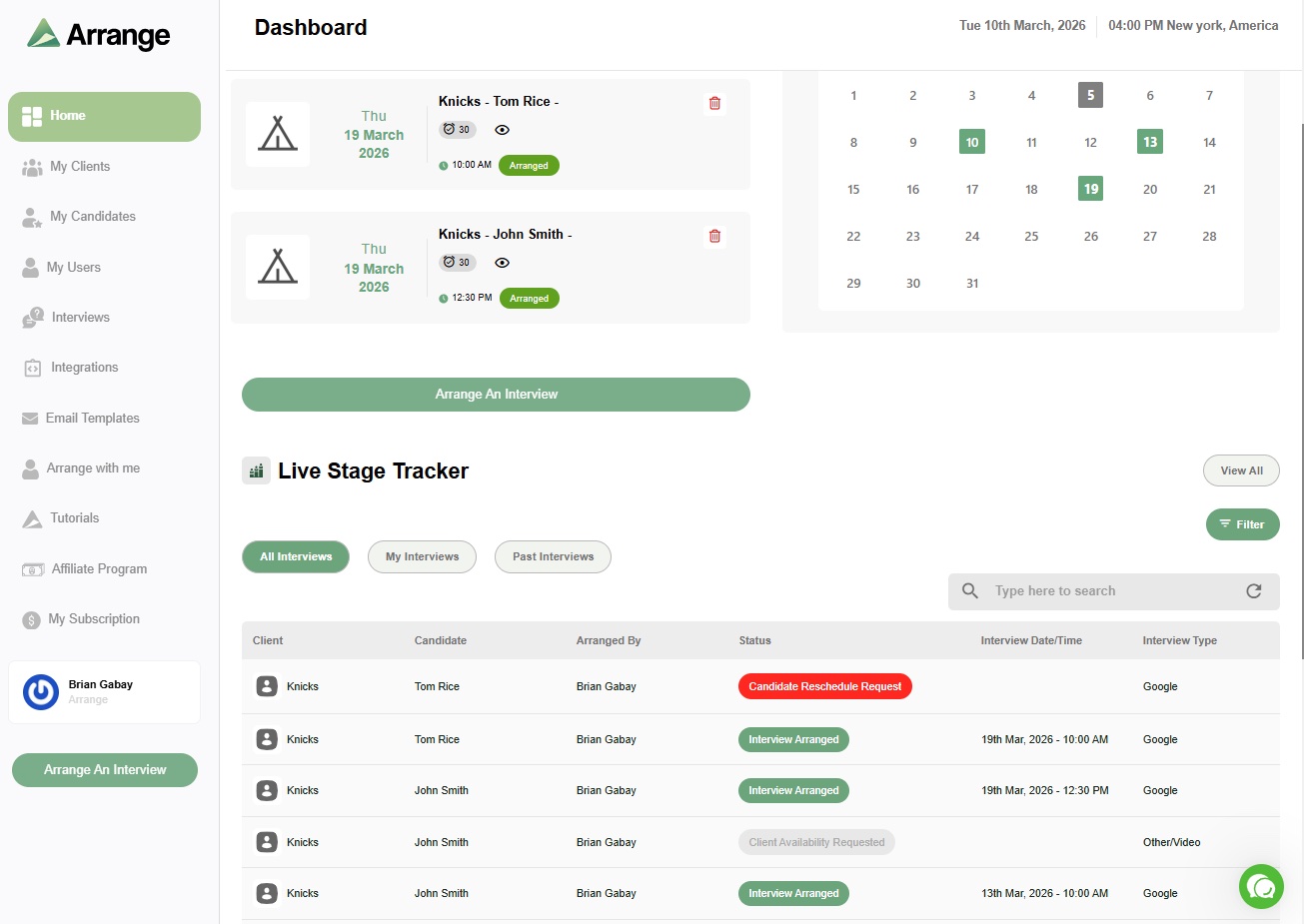
Arrange closes the gap between a strong screen and a booked client interview. Add a Submission Link to your candidate submission, and if your client wants to meet, they click it and choose how to schedule. You can also run the coordination yourself: collect the candidate's availability first, start with the client's, or let Matchmaker book the earliest time that works for both.
Neither the candidate nor the client needs an account, everything carries your agency's branding, and confirmed interviews sync back to Loxo, Bullhorn, Crelate, Recruiterflow or Recruit CRM automatically. You can start on the free plan.
Frequently asked questions
What is the purpose of candidate screening?
Candidate screening makes sure hiring managers only spend time on candidates who meet the role's requirements and are genuinely interested. It filters out mismatches on experience, compensation, location or timing early, before anyone invests in a full interview.
What questions should a recruiter ask in a screening call?
Strong screening calls cover motivation for a move, compensation expectations, location and work arrangement, notice period, other active interview processes, and specific examples of the two or three skills the role depends on most. Ending with clear next steps and interview availability keeps the process moving.
How long should a candidate screening call take?
Most screening calls run 20 to 30 minutes. That's enough time to cover motivation, logistics and the most important experience without turning the screen into a full interview, which is usually the client's job.