


Every recruiting agency has a version of this problem. A candidate is ready. A client is interested. The interview needs to happen. And then a week goes by while everyone waits on everyone else's calendar.
It's not incompetence - it's arithmetic. Getting a 30-minute interview on the calendar requires coordinating the availability of two people who don't work together, don't share a calendar system, and both have other priorities. The recruiter is the one managing that coordination, and they're usually doing it across multiple roles at once.
The cost of that coordination is real. Here's a way to think about it.

The math behind the problem
Assume a recruiter at an agency handles 15 active searches. Not all of them are at the interview stage at any given time, but let's say 8 are in some state of interview coordination at any moment - waiting on a client to share availability, waiting on a candidate to confirm, following up on a link that went cold.
A conservative estimate of time spent per active interview coordination: 45 minutes per week, spread across emails sent, responses read, follow-ups drafted, ATS records updated, and mental overhead of tracking where everything stands.
8 interviews in coordination x 45 minutes = 6 hours per week on scheduling coordination alone.
At a billing rate of $80/hour for a senior recruiter's time (the opportunity cost, not what you're charging clients), that's $480 per week - about $25,000 per year - spent on coordination work that doesn't directly generate revenue.
That's one recruiter. For an agency with five recruiters, the math gets uncomfortable fast.
Where the time actually goes
The scheduling coordination problem has a few specific drains that add up:
Availability collection. You email the client asking for times. They respond three days later with a few slots. You email the candidate. The candidate can't make two of the three slots and offers alternatives. You go back to the client. This exchange can take a week even when everyone is being responsive.
Follow-up overhead. Candidates and clients don't always respond on the first outreach. A typical interview scheduling sequence involves 2-3 touchpoints per party before a time is confirmed. That's 4-6 emails per interview, minimum, plus the mental load of tracking what's been sent and what's still waiting.
Manual ATS updates. When an interview is finally confirmed, someone has to log it. Stage change, interview date, interviewer name, meeting link. For agencies using Loxo, Crelate, or similar tools, this is a manual step that takes 5-10 minutes per interview - and it's the kind of task that gets skipped when things are busy, which means your pipeline data is always slightly unreliable.
Rescheduling. Interviews get moved. When they do, the whole coordination cycle repeats. A single reschedule can add another 3-5 days to the timeline.
What changes when you remove the back-and-forth
The agencies that have gotten this time back haven't done it through discipline or better email habits. They've removed the back-and-forth from the process entirely.
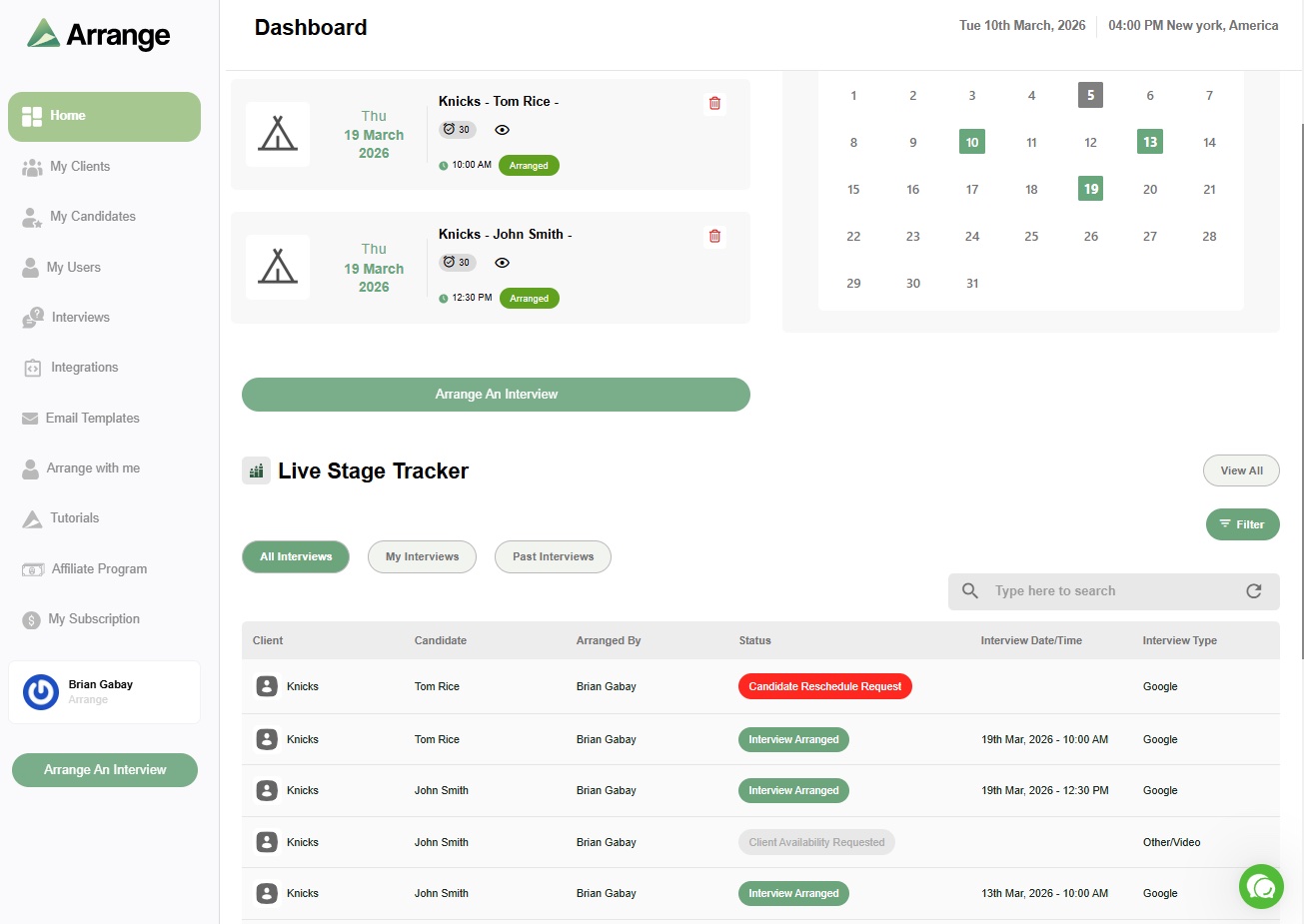
When a candidate is submitted to a client, the submission email includes a scheduling link. The client clicks it when they're ready - no email required from the recruiter. The client and candidate handle availability through the link without either of them creating an account or logging in to anything. The interview is confirmed automatically. The ATS updates.
The recruiter's involvement in scheduling: sending the initial submission. Everything after that happens without them.
The $47,000 number in the headline is roughly what that coordination overhead costs a five-recruiter agency per year. Some agencies spend more, some less - it depends on volume and how efficiently they're currently running the coordination. But for most agencies managing more than a handful of active searches, the number is real and it's recoverable.
Arrange is built to recover it. There's a 14-day free trial at letsarrange.io - no credit card required, no sales call necessary to get started.


.jpg)

.jpg)
.jpg)