


The Myth of Recruiter-Led Tool Decisions
If you ask most recruiters what tools they use, they'll give you a confident answer. Loxo or Crelate for the ATS. LinkedIn Recruiter for sourcing. Maybe Calendly for scheduling. It sounds like a deliberate stack.
But here's what's actually true: in most recruiting organizations, the tools in use weren't chosen by the recruiters using them. They were chosen by someone else, for reasons that had little to do with what makes recruiting easier.

The 5 People Who Actually Decide What Tools Recruiters Use
Understanding who controls the tools in your organization is the first step to understanding why certain problems persist - and what you can actually do about them.
1. The Operations or Finance Leader - They're looking at cost per tool, contract terms, and whether the vendor will be around in five years. They often don't understand the workflow deeply enough to know what capabilities they're trading away when they choose the cheaper option.
2. The Procurement Team - At larger agencies, there's a formal procurement process. Tools get evaluated on compliance, security documentation, and vendor stability - not on whether the scheduling flow actually works for external client coordination.
3. The Agency Owner or CEO - Often makes tool decisions based on what they used at their last job, or what a peer at another agency recommended. Defaults to familiar over better.
4. The IT Department - Controls what integrations are permissible, what data can flow where, and what vendors pass security review. A tool that doesn't pass IT review doesn't get used regardless of how good it is.
5. The Vendor Ecosystem - ATS platforms often have preferred integration partners. If your ATS recommends a scheduling tool, many agencies default to it without evaluating whether it's actually the best fit for their workflow.
The Problem: Everyone Is Optimizing for Something Different
Operations wants lower cost. Procurement wants compliance. The owner wants familiarity. IT wants security. The vendor wants to expand their ecosystem. The recruiter wants to spend less time chasing calendar availability.
Only one of those groups is actually doing the scheduling work. And they're often the last ones consulted.
Where Scheduling Falls Apart
This mismatch shows up most visibly in interview scheduling. The tools agencies end up with - usually whatever the ATS natively supports, or a generic tool like Calendly that someone recognized - weren't chosen because they handle the specific coordination problem agency recruiters face.
That problem: you're coordinating between a candidate and a client who don't share a system, a calendar, or a relationship with each other. Most scheduling tools assume you're the one with the calendar and you're scheduling a meeting you'll attend. That's not the agency recruiter's situation.
The Missing Layer: Coordination Across People
What's usually missing from the tools agencies end up with is the ability to collect availability from two external parties, match it, and confirm an interview without the recruiter doing the matching manually. That's a coordination layer - and it's the part that creates the most email back-and-forth, the most follow-up work, and the most risk of things falling through.
Where Arrange Fits In
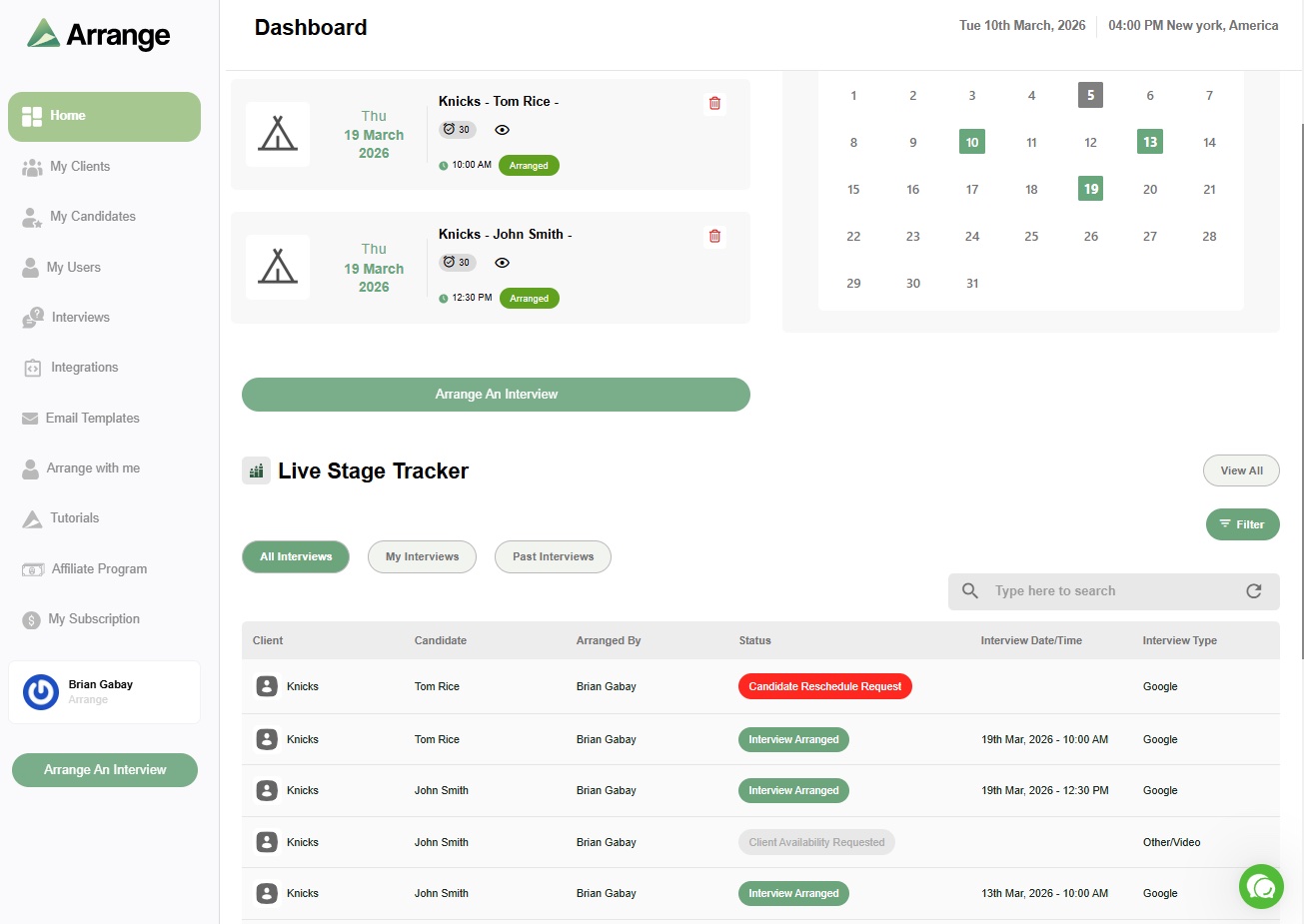
Arrange was built to be the tool that addresses the coordination problem directly. Not as an ATS replacement, not as a calendar tool - as the layer between submission and confirmed interview that most agencies are currently handling through email.
When a recruiter submits a candidate, they include a scheduling link. The client and candidate handle availability through the link without logging in or creating accounts. The interview confirms automatically. The ATS updates. The recruiter's inbox stays empty.
Why It Works Across All 5 Stakeholders:
Operations: predictable per-user pricing, no platform minimums. Procurement: no login required for external parties, clean data handling. Owner: 14-day free trial, no sales call required. IT: no OAuth connections required from clients or candidates. Recruiters: the back-and-forth disappears.
Final Thought
The tools recruiters use are rarely the tools they would choose if they were the ones deciding. The good news is that for scheduling specifically - the problem that most directly affects daily productivity - there's now a tool built for what agency recruiters actually do rather than what someone assumed they do.
There's a 14-day free trial at letsarrange.io.


.jpg)

.jpg)
.jpg)