Product

Does interview scheduling software actually reduce recruiter workload?

calender-image
April 13, 2026
clock-image
4 mins

Interview scheduling automation is sold as a time-saver. And it can be - but only if it's solving the right problem for the way you actually work.

For in-house recruiting teams running straightforward one-on-one scheduling, most tools deliver on the promise. For recruiting agencies coordinating between clients and candidates across multiple open roles, the answer is more complicated.

What scheduling automation actually eliminates

The manual work in interview scheduling comes from a few specific places: collecting availability from one party, relaying it to another, finding the overlap, confirming the time, sending the calendar invite, and then doing it all over again if anything changes.

Scheduling automation can eliminate most of this - but only the parts it's designed to handle. The key question is whether the tool is built to coordinate between external parties (your client and your candidate), or just to let someone book time with you.

There's a meaningful difference between those two things.

Where scheduling tools fall short for agencies

Most scheduling tools - Calendly being the most common example - work by letting you share a link that someone uses to book time with you. That eliminates the back-and-forth for simple two-party scheduling. But it doesn't solve the agency problem.

As an agency recruiter, you're not the one being booked. You're coordinating a meeting between your client and your candidate. Getting your client's availability into the process still typically requires an email. Getting the candidate's times still requires a separate message. Matching the two still falls on you.

In that workflow, a basic scheduling link automates maybe 20% of the coordination and leaves the rest exactly as manual as before.

What actually reduces recruiter workload

The tools that genuinely reduce recruiter workload in agency recruiting are the ones built for three-party coordination - where the software collects availability from both sides, finds the match, and confirms the interview without requiring the recruiter to manually bridge the gap.

That means:

  • Candidates can submit their availability through a link without creating an account
  • Clients can share their times or confirm from candidate availability through the same kind of frictionless experience
  • The system finds the overlap and sends confirmations automatically
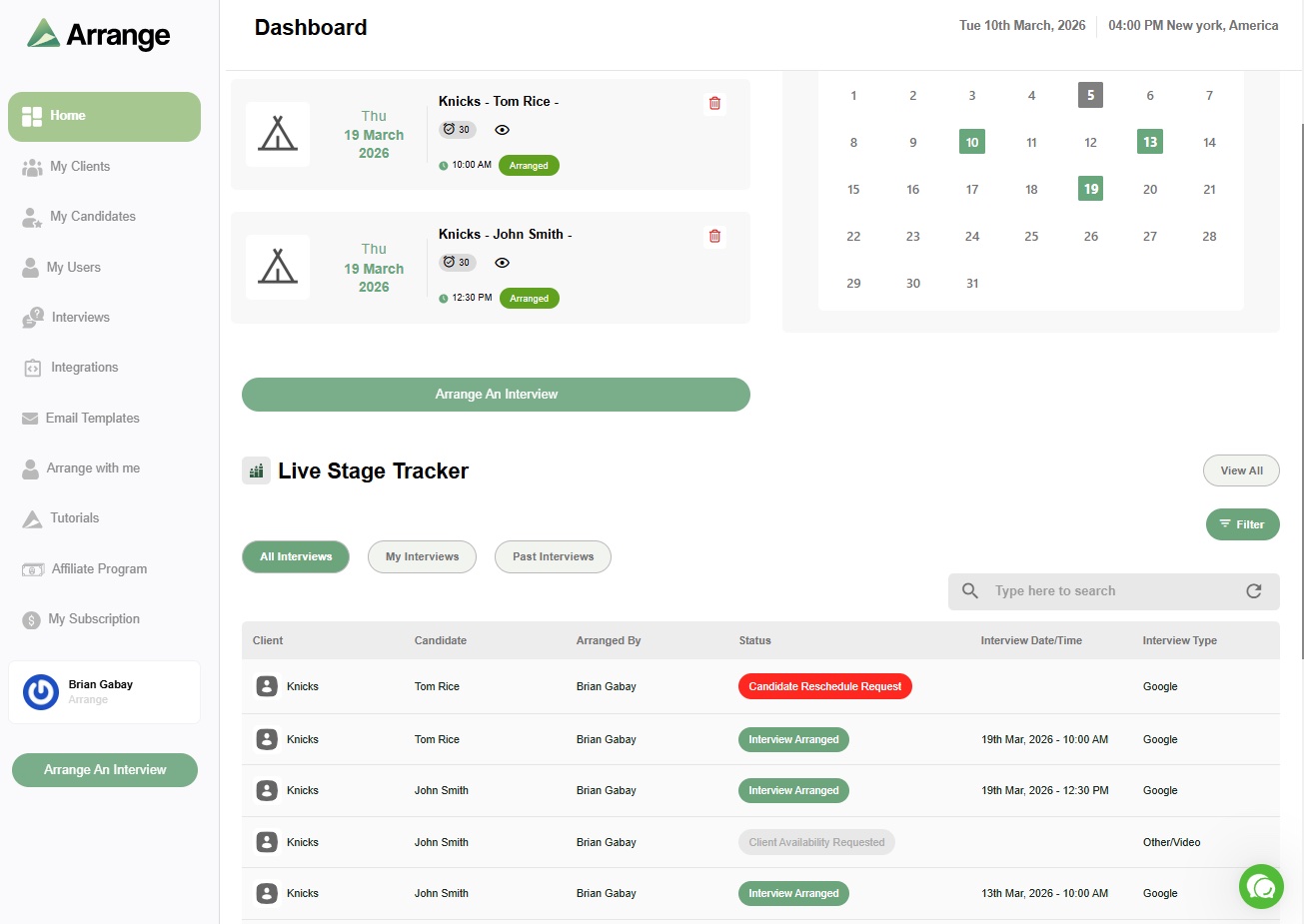
  • The recruiter stays in the loop through a live view - not through inbox management

When all of that is automated, the workload reduction is significant. The back-and-forth that used to take multiple rounds of email gets compressed into a single coordinated flow. The follow-up chasing largely disappears. And the recruiter's attention goes to the cases that actually need it - the ones where something has stalled - rather than being spread across every active interview equally.

The honest answer

Yes, interview scheduling software reduces recruiter workload - but only if it's built for your actual workflow. A generic scheduling link moves the needle a little. A tool designed for the three-party coordination problem that agency recruiters face moves it a lot.

The question worth asking before choosing a tool isn't just "does this automate scheduling?" It's "does this automate the specific kind of scheduling I actually do?"

For external recruiters, that means coordinating between clients and candidates who don't share a system, aren't motivated to create accounts, and need to confirm interviews without a lot of friction. Most scheduling tools don't handle that well. The ones that do make a real difference to how much time goes into coordination every week.

FAQs

How much time does interview scheduling software save recruiters?

It depends heavily on the tool and the workflow. For agency recruiters using a platform built for three-party coordination, the time saved is typically in the range of several hours per week - primarily from eliminating the back-and-forth email rounds that used to be required to get a client and candidate aligned on a time. Tools that only handle simple two-party booking save significantly less.

Does scheduling automation work if my clients don't want to use new software?

The best scheduling tools for agencies don't require clients to learn or log in to anything. They interact through a simple link - sharing their availability or confirming a time with a single click. If a tool requires your clients to create an account or navigate a new platform, adoption will be low and the automation won't stick.

Can scheduling software reduce recruiter workload without replacing the personal touch?

Yes. Automating the logistics of scheduling - availability collection, matching, calendar invites - doesn't remove the recruiter from the process. It removes the administrative overhead so the recruiter can focus on the relationship side: prepping candidates, advising clients, and managing the outcome rather than the calendar.

Similar Blogs