


Calendly is one of the most widely used scheduling tools on the market, and many recruiters use it for exactly this purpose - scheduling meetings with external parties. The basic workflow works: you share a link, the other person picks a time, a meeting appears on both calendars.
But external scheduling for recruiting agencies has a specific coordination structure that Calendly wasn't designed for.

How Calendly handles external scheduling
Calendly works by connecting your calendar and letting external parties book time based on your availability. You set the parameters - meeting length, buffer time, available hours - and anyone with your link can book a slot without back-and-forth.
For recruiters booking meetings where they're one of the attendees - intro calls with candidates, check-ins with clients, BD conversations - Calendly handles this cleanly and is genuinely useful.
Where it gets complicated for recruiting agencies
Agency recruiters aren't usually scheduling meetings for themselves. They're scheduling interviews between a candidate and a client - two external parties who have no shared system and won't both be attending the same Calendly booking.
Your client can't share their availability through Calendly
Calendly is built for the person who owns the link. It shares your availability, not your client's. If you want to coordinate a time that works for your client's hiring manager, you can't use your Calendly link to collect their availability - you'd need them to set up their own Calendly link and share it with the candidate, which means asking your client to set up a third-party tool for a one-time interview.
Most clients won't do that. And if they do, you've now removed yourself from the coordination loop entirely - you won't know what time was selected unless someone tells you.
There's no way to give your client control without losing your own visibility
The fundamental tension is that Calendly gives control to the link owner. If you own the link, you control the booking but you don't have your client's availability. If you ask your client to own the link, they control the booking but you've lost visibility into what's being scheduled.
Once the link is sent, you're largely out of the loop
Calendly sends a booking confirmation when something is scheduled. But between sending the link and receiving the confirmation, you have no visibility into whether the candidate opened it, whether they're considering times, or whether something is blocking them. For agencies managing multiple active interviews, that blind spot creates risk.
It doesn't support simultaneous availability matching
The most efficient interview scheduling for agencies is when both parties submit their availability simultaneously and the system confirms the first match automatically. Calendly's model - one party books from the other's available slots - doesn't support this. You're always one step behind in the coordination.
The bottom line
Calendly handles external scheduling well when you're one of the parties in the meeting. For agency recruiters coordinating meetings between two other people, it leaves the hardest coordination step - getting both sides to agree on a time - still in your hands.
FAQs
Can I use Calendly to schedule interviews between a client and a candidate?
You can approximate it - typically by creating a scheduling link on behalf of one party and manually coordinating the other side. But Calendly doesn't have a native way for both a client and a candidate to interact with the same scheduling process without the recruiter doing manual coordination in between.
What tool handles external scheduling between clients and candidates for recruiting agencies?
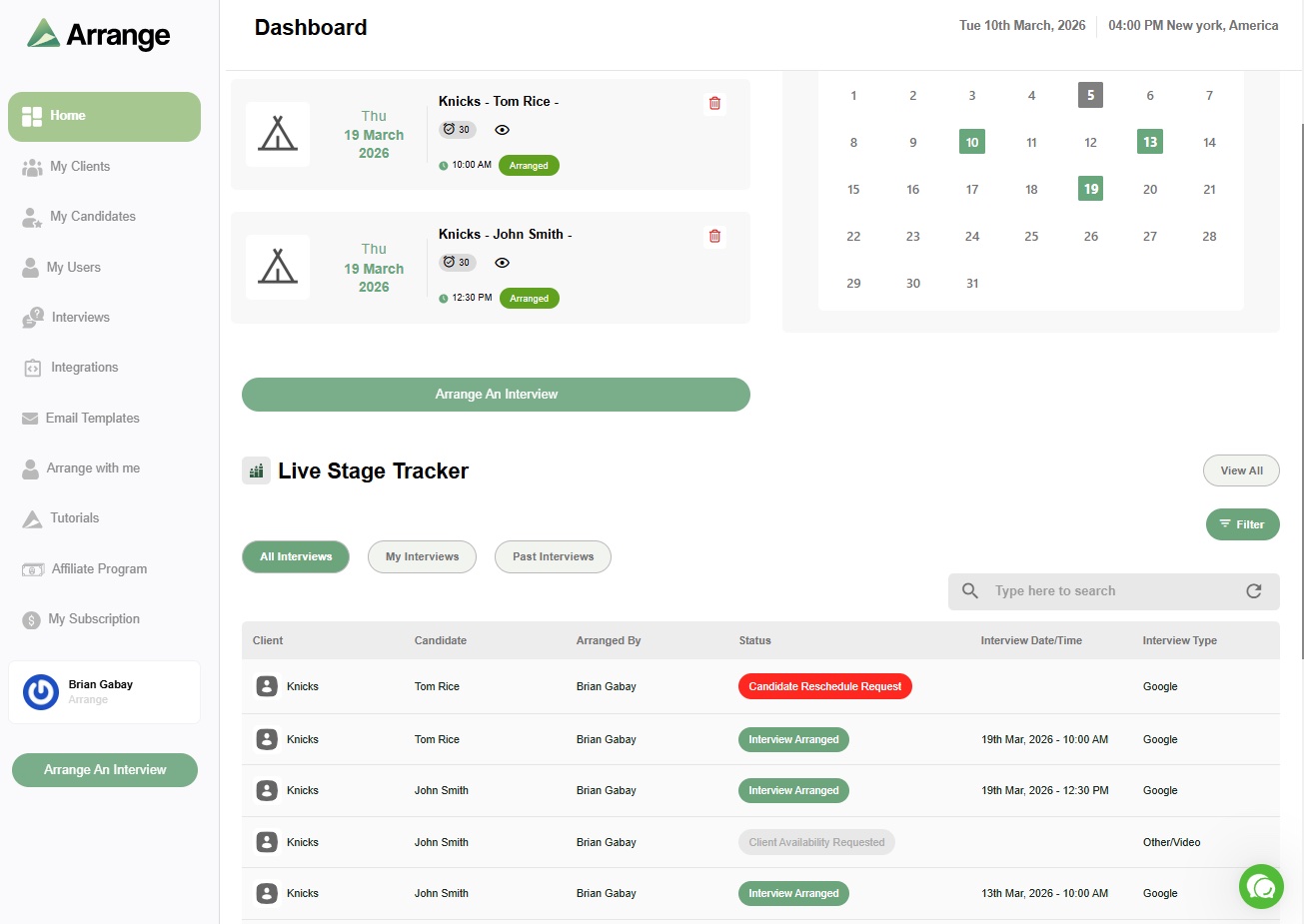
Arrange is built for this use case. Clients and candidates both interact with the scheduling process through a link - without logging in to anything - and the interview confirms automatically when both sides complete their step. The recruiter maintains visibility throughout without being the manual conduit for every exchange.


.jpg)

.jpg)
.jpg)